Operating Table Buying Guide for Hospital and Distributor Projects
Choosing an operating table for a hospital or distributor project starts with the surgical specialties, positioning needs and room plan. This guide explains table types, selection factors and procurement steps, with configuration details confirmed at quotation.
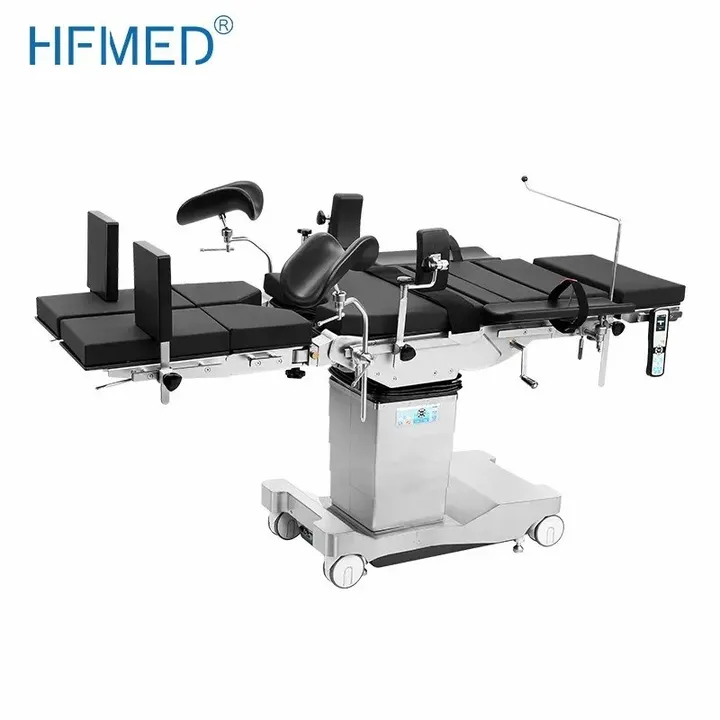
Selection Factors for Operating Table Projects
When choosing an operating table for a hospital or distributor project, start with the specialties served, the positions surgeons need and the room layout around the table. An operating table is a height- and position-adjustable platform used in an operating room to support a patient during surgery. Huifeng Medical makes operating tables within its surgical equipment range, and model-specific specifications and configurations are confirmed during quotation. The points below help structure the technical and commercial review.
Specialty use is the main filter. General surgery, orthopedics, ophthalmology, gynecology and veterinary work call for different table forms and movement ranges. Positioning needs come next: head-down and lateral tilt, leg-section adjustment, back-section articulation, and the space needed for staff access all affect the choice. A distributor should also check how the table fits the room schedule and the equipment package for the project. Configuration questions go to quotation.
Distributors and contractors also compare how an operating table fits a project package. The table must match the room workflow, the other equipment in the operating suite, and the delivery sequence for site works. Hospital buyers should review user departments, accessory needs and service access before finalizing a model. Huifeng Medical’s range covers surgical tables, electric operating tables, hydraulic operating tables, orthopedic operating tables, ophthalmic operating tables, gynecological tables and veterinary operating tables, with specifications confirmed per quotation. This keeps the room plan and the table selection aligned.
- Specialty and procedure mix the room must support
- Positioning adjustments and movement range
- Room clearances, ceiling routes and equipment interfaces
- Delivery sequence and site access for the project
- Model and configuration details confirmed in quotation
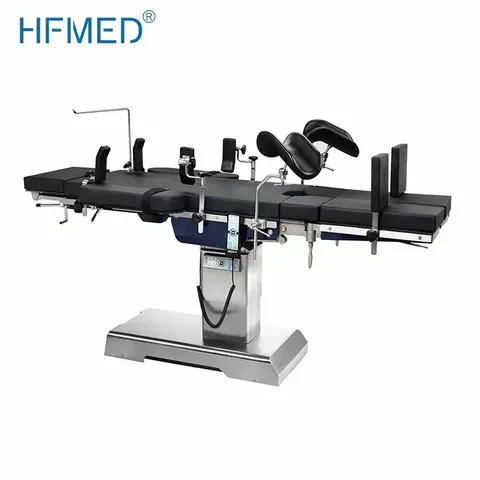
Black segmented tabletop with padded supports 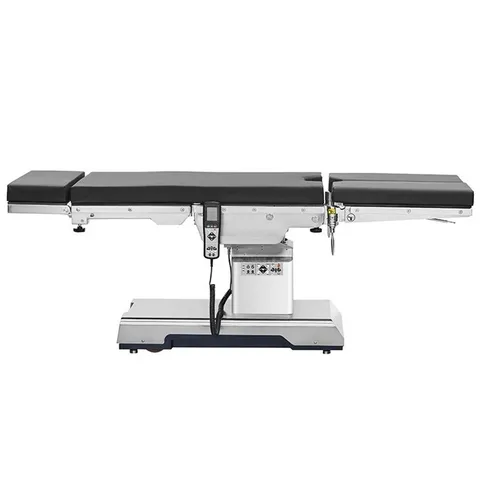
Flat black tabletop on central pedestal
Understanding Types of Operating Tables
The main types of operating tables are grouped by design and function. General surgical tables support a broad mix of procedures, while specialty tables are shaped around fields such as orthopedics, ophthalmology, gynecology or veterinary surgery. Electric and hydraulic tables differ in how movements are powered and adjusted. Mobile and fixed configurations differ in where the table is used and how the room is planned. These categories overlap, so buyers should match the table type to the department and workflow, then confirm the detailed configuration in quotation.
For a hospital project, specialty use usually decides the table form before other details are reviewed. Orthopedic, ophthalmic and gynecological rooms each have their own positioning patterns, access needs and staff workflow. Veterinary operating tables follow the needs of animal surgery rooms. General surgical tables serve rooms that handle a changing procedure mix. Huifeng Medical offers these table categories, and each configuration is quoted against the room and procedure requirements. The aim is to keep the table type consistent with the room’s daily use.
- General surgical tables for mixed procedure rooms
- Specialty tables for orthopedics, ophthalmology, gynecology or veterinary rooms
- Electric tables with powered adjustment
- Hydraulic tables with hydraulic adjustment
- Mobile tables for shared rooms and fixed tables for dedicated rooms
Electric and hydraulic designs are selected by how the table is adjusted in use and how the room team prefers to work. Mobile tables can be moved between rooms, while fixed tables are planned into a dedicated operating space. Buyers should also consider whether the table will be used with surgical lights, medical pendants and other operating room equipment. The operating room equipment list gives a wider view of suite planning. Model-specific specifications are confirmed in quotation, and departments do not all use the same table type.
Procurement Steps for Operating Table Orders
A typical procurement sequence starts with the hospital or contractor sending the equipment list, room requirements and quantities. After the order is placed, production, inspection and packing follow, and shipping is arranged under the agreed Incoterm. Model-specific specifications and configuration questions are settled during quotation. Clear room data at the start helps keep the table scope and the site plan aligned.
Huifeng Medical was established in 1992 and became a joint-stock company in 2018. The company promotes the SHANGYI and HFMED brands and operates 3 factories, each focused on a different product line. Its main products include surgical lights, operating tables, medical pendants, operating lamps, pneumatic tourniquets, air cushion beds, oxygen bags, hospital beds and bed head units. More than 90% of production is exported, and sales cover more than 50 countries. This product background helps distributors plan a wider equipment package around the table order.
Huifeng Medical’s average lead time is within 15 working days in both peak and off seasons, with actual timing confirmed in each quotation. Accepted payment terms include L/C, T/T, PayPal, Western Union and MoneyGram. Supported Incoterms include FOB, CFR, CIF, DAP, DDP, FCA and EXW, confirmed per quotation. These terms are set per order rather than applied as a general rule.
OEM and ODM services are available alongside the HFMED brand, with OEM/ODM terms confirmed per quotation. The company joined the Shanghai Medical Device Industry Association in 2000 and started exporting in 2008. Its main markets include North America, South America, Eastern Europe, Southeast Asia, Africa, Oceania, the Middle East, Eastern Asia and Western Europe. A project enquiry should include the room list, quantities and required configuration so the quotation can address the operating table scope clearly and support the hospital or contractor review.
Request a quotation
Describe your operating room, ICU or ward project and the equipment list, and we will reply with matching models and a quotation.
Or write to sales@surgicallightmanufacturer.com